
4H T2c My Non-fiction Reading Diary Entries
The Story Behind This Task
Why we’re doing this
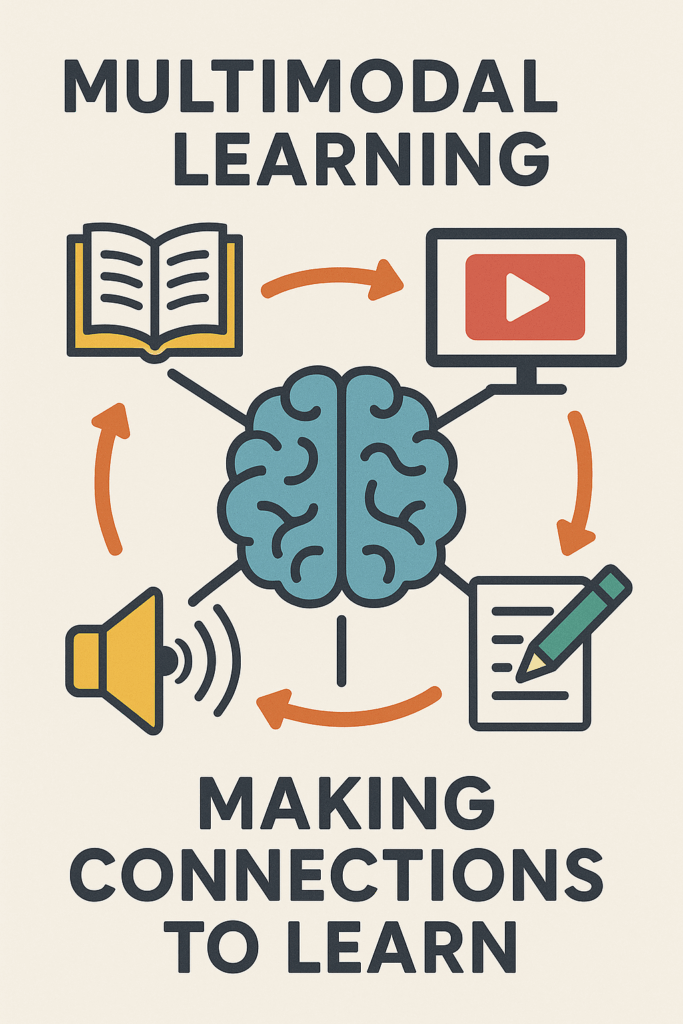
To help you notice how everything you learn is linked; what you experience, what you study in class, what you read, what you watch, and what happens in the world around you are all linked. Learning becomes easier and more meaningful when you start connecting these things consciously. When you make connections, you learn.
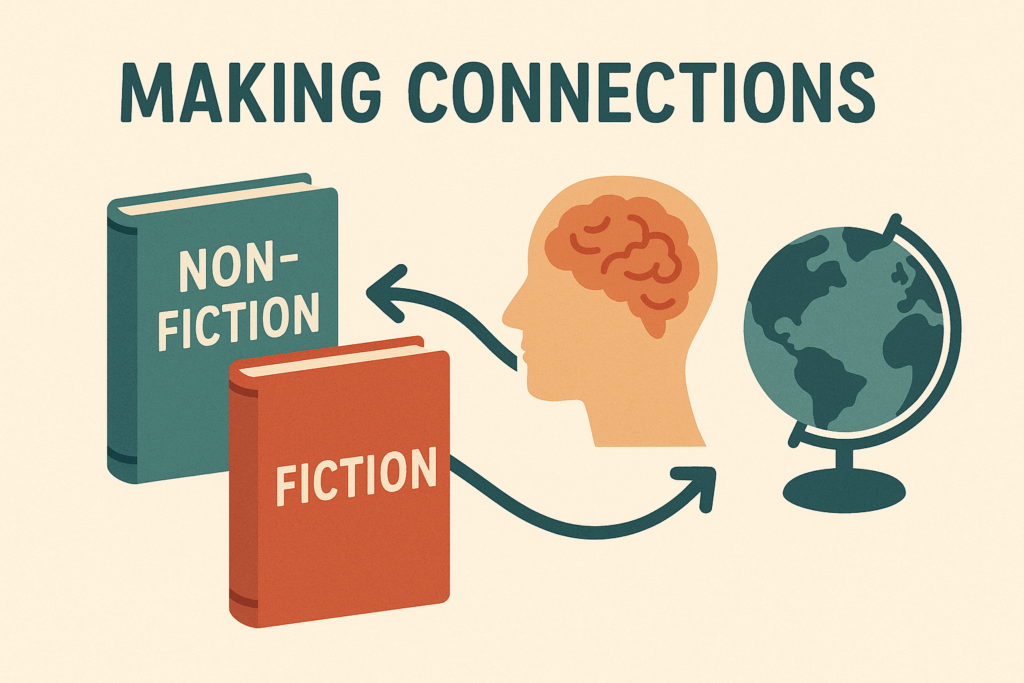
Even the most imaginative, mystical or fantasy novel is full of real ideas about science, history, psychology, or everyday life. At the same time, non‑fiction books about people, events or discoveries often feel like stories too. By reading a non‑fiction book alongside two novels, you’ll learn to see how facts and fiction can work together to give you a deeper view of the world.
What you’ll be doing
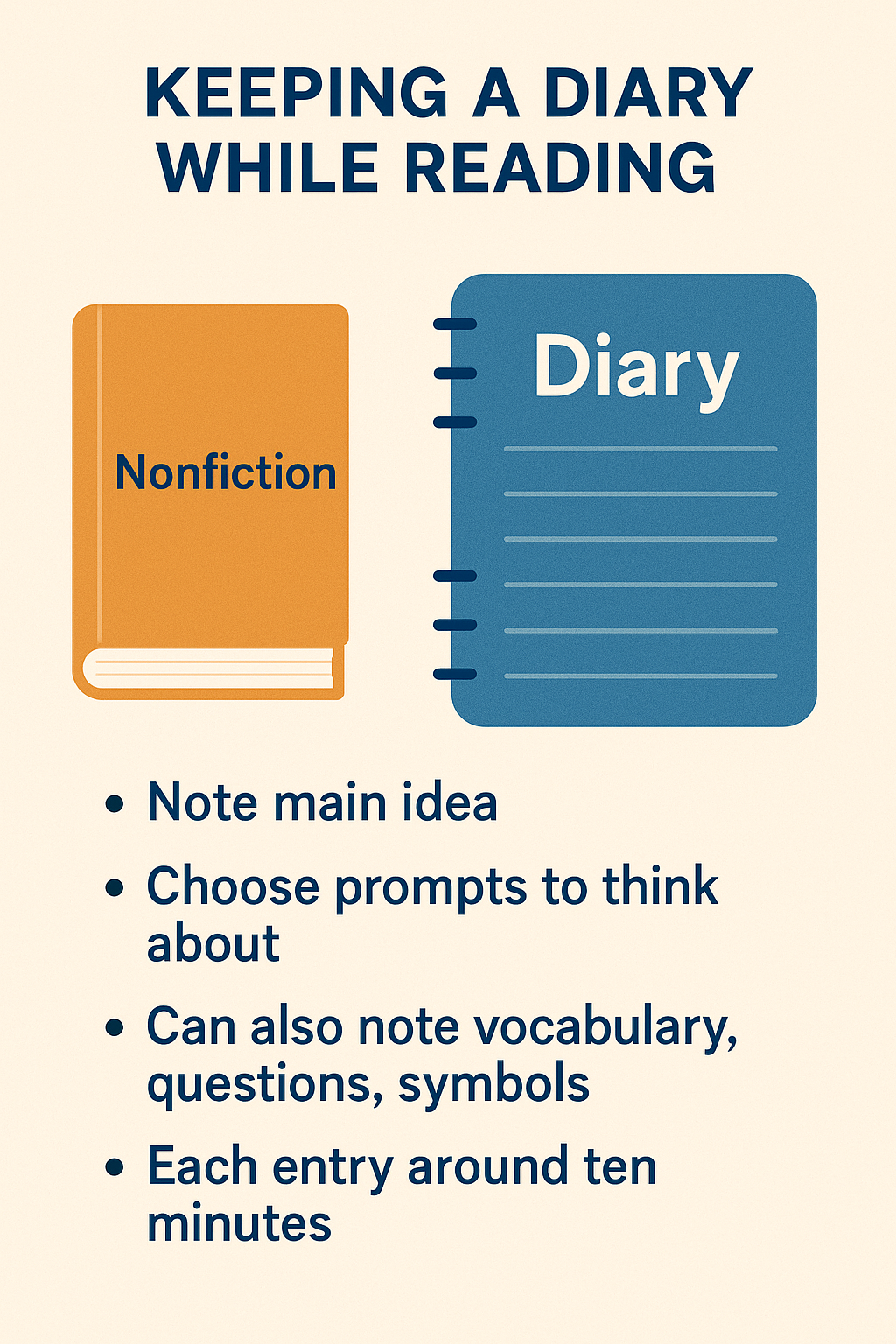
While you’re reading your non‑fiction book, you’ll keep a short diary. After each chapter you’ll note the main idea, then choose one or two prompts to think about. You might ask yourself: How does this connect to your own life? Does it remind you of something in a novel or film? What does it tell you about people or society?
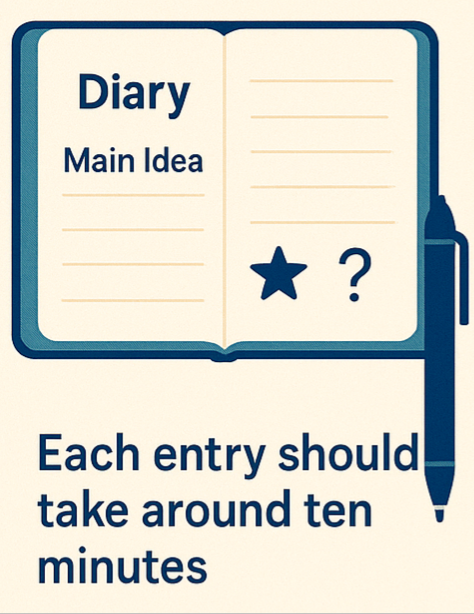
You can also note new vocabulary, jot down a question you have, or sketch a symbol that captures the chapter. Each entry should take around ten minutes, just enough to capture your thoughts while they’re fresh.
How this helps you grow
This diary isn’t about right or wrong answers. It’s about making the book meaningful for you. It is about making connections. Writing down your reactions helps you remember what you’ve read and prepares you to compare your non‑fiction book to the novels you’re reading later. For example during The Reading Quest Project Test in test week 2.
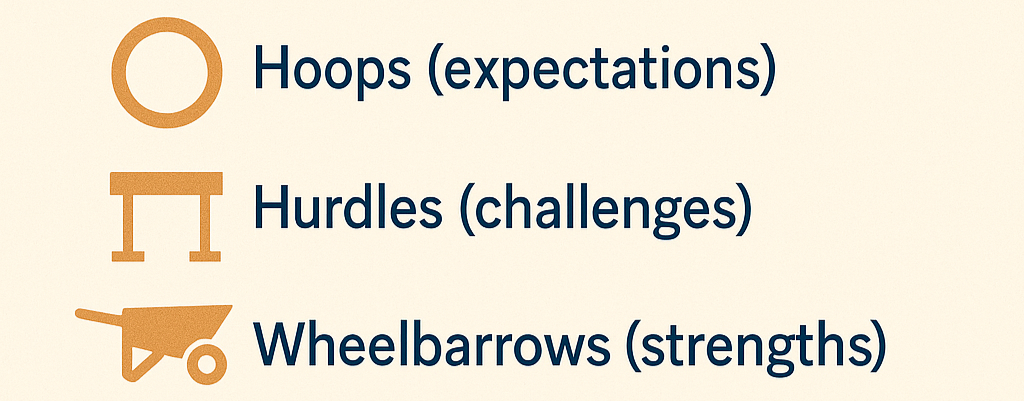
It also ties into our See the Human project that we’ve just completed: by reflecting on hoops (expectations), hurdles (challenges) and wheelbarrows (strengths), you’ll discover more about yourself and how you relate to people and ideas in the wider world.
Want to get even more learning out of this task?
Explore the topic in different ways: watch videos, listen to podcasts, talk about it with others, or even try things out in real life when that’s safe. The more ways you engage with an idea, the better you understand it.
Duration
You have five weeks to finish your non-fiction book and three weeks to finish the task. Check the Magister studiewijzer for the exact deadline.
Rubric
The examples in the explore phase serve as examples of what your diary entries should look like. Check out the rubric below.
There is no mark (cijfer) for this task. Your teacher checks if your diary is complete and meets the requirements: at least 8 diary entries, all 3 steps in every entry, and prompts A, B and C each used at least twice. The result is ✔ Completed or ↻ Not yet. Use the checklist after every entry.
How this task works
- Explore – get started, study four example entries and learn the words and grammar you need.
- Produce – your teacher shows you how to write an entry; then you read your book and write at least 8 entries.
- Show – practise, pass the Vocab and Grammar check, check your diary and hand it in.
Year and level
Year 4
Reading: B2 (oefenniveau 4 havo)
Writing: A2+/B1 (oefenniveau 4 havo)
Your diary is checked at writing level A2+/B1. The example entries in the Explore phase are written at a higher level (B2/C1). Use them as models for the steps and the ideas – you do not have to write at that level yet.
Learning Goals
Show the learning goals
Nadat je deze taak af hebt kan je de onderstaande leerdoelen afvinken op je leerdoelenkaart.
Schrijven (A2+/B1)
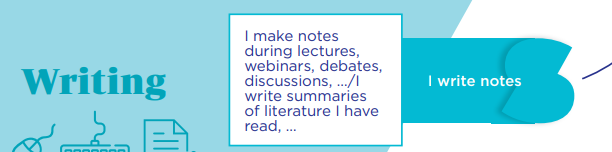
Link naar volledige leerdoelen kaart
De bovenstaande leerdoelen voor schrijven en lezen zijn terug te vinden op de leerdoelkaart B1 voor moderne vreemde talen (MVT). Zie deze link voor het volledige overzicht van de B1 MVT leerdoelen.
Other Learning Goals
1 You can explain big ideas in your own words.
After reading a science, self‑help, biography or history text, you can pick out and describe the main idea using simple language, including any new vocabulary.
2 You can connect different kinds of books.
You understand how to look for links between a non‑fiction text and a novel, such as similar themes or experiences, and you can explain why those links are interesting or important.
3 You can relate what you read to real life.
You understand how the stories you read connect to your own feelings or to issues in society, and you can write about these connections in a thoughtful way.
4 You can use English accurately and creatively.
When writing your diary entries, you can use the right verb tenses, linking words and relative clauses, and you can include subject‑specific words to make your meaning clear.
5 You can create a short, creative note.
At the end of your reflection, you can write a catchy question or statement that sums up your ideas and invites further thought.
6 You can organise your reflections step by step.
By following the quick capture, reflection and creative note stages, you understand how to structure your diary writing so that your ideas flow logically and make sense.